Leadership effectiveness - The feedback series, Part 2
In part 2 of the feedback series, we explore the foundation of feedback and what makes it effective and ineffective. This series is aimed at helping leaders improve their effectiveness by rethinking how feedback works and how best to use it for improved outcomes.
LEADERSHIPFEEDBACKHIGH PERFORMING TEAMS
Roland Lewis
4/8/20262 min read
Feedback
Imagine you’re standing in your boss’ office, and she (or he) is giving you feedback that you didn’t ask for. How do you feel?
And what about those ticks, crosses and ‘good job’ comments on an assignment…back in the day. Do you still think about them as life changing feedback?
Now think about how you feel when you seek feedback, when you’re sitting over a piece of work, some strategic plan or a critical document, hearing the information you asked for. Sharing in it. How do you feel?
Not all feedback is created equally – that’s why Feed Up is so important. Feedback needs to mean something to you.
We’re often told to always say “thank you” for feedback. In reality, poor feedback tells you more about the capacity of the person giving it than the quality of your work. I don’t want to dwell on the negatives. I’m a strengths based operator, so let’s dig into what makes feedback really sing.
Improvement depends on information.
Without it, people repeat the same actions, often unaware of what is working and what is not. This is why feedback plays such a central role in learning and development. In their influential research paper, The Power of Feedback, John Hattie and Helen Timperley argue that feedback is among the most powerful influences on achievement. But its impact does not come from simply telling people how they did. Effective feedback works because it helps people interpret their progress and adjust their thinking, strategies and actions.
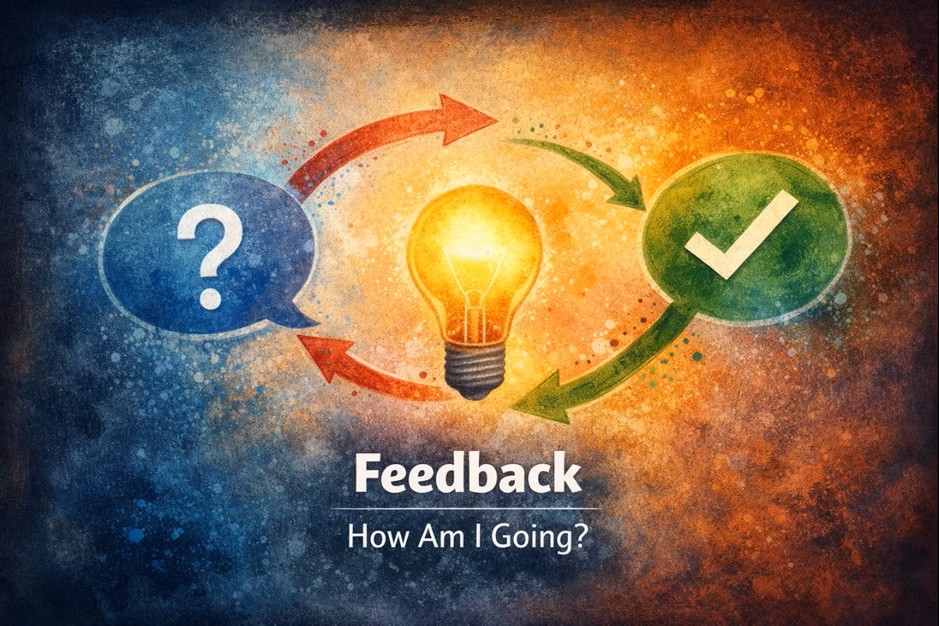
At its core, Feedback answers the question:
How am I going?
Done well, it provides information about the person’s current progress relative to their goal. Its central purpose is to help reduce the gap between current performance and desired performance. Ideally, it should come after feed up has established the goal and should help them evaluate:
How close they are to the intention of their goal
What aspects of their work meet their criteria for success
Where misunderstandings or errors exist
Whether their strategy is effective
In this way, feedback provides information about progress, enabling them to adjust their thinking, strategies or effort.
Feedback is one of the most powerful influences on learning and achievement, though its impact depends heavily on how it is delivered and interpreted.
So what?
Feedback is not about judgment. It's about information that enables improvement.
When people understand how they are going in relation to a meaningful goal, they can adjust their thinking, refine their strategy and improve their performance. Without that information, progress relies largely on guesswork.
For leaders, coaches and teachers, this creates an important responsibility. Feedback should not simply evaluate the work that has been done. Its real purpose is to help people understand their progress so they can decide what to do next. When feedback is grounded in a clear goal and provides meaningful information about progress, it becomes a powerful catalyst for learning and growth.
But feedback alone is not enough. Once we understand how we are going, the next question naturally follows:
Where to next?
In the next article in this series, we’ll explore feed forward - the part of the feedback process that helps people turn insight into action and improvement.
Until then, a question worth reflecting on: When we give feedback, are we providing judgment or information that helps someone improve?
Lead on. Lead well.
Roland
Keen to connect?
Email me at roland@rolandlewiscoaching.com
Or you can find me on LinkedIn:
https://www.linkedin.com/company/roland-lewis-coaching-and-consulting
Contact
Phone
© 2025. All rights reserved.